

In high-voltage transmission and critical industrial power, transformer oil is not simply a coolant or a filler. It is part of the dielectric system. Its moisture content, gas load, particulate cleanliness, acid number, and interfacial tension collectively influence whether windings stay quiet under lightning impulse, whether partial discharge stays bounded, and whether the solid cellulose insulation ages at a manageable rate. For reliability engineers, the practical taxonomy of transformer oil regeneration vs purification is therefore not academic; it is a defense layer for the network.
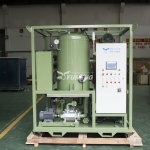
A vacuum transformer oil purifier protects the physical dielectric interface. By heating oil in a controlled range, spraying or film-distributing it under vacuum, extracting vaporized water, drawing off dissolved gases, and passing the stream through micron-grade filtration, the machine restores the conditions under which breakdown voltage performs as designed. On the YUNENG 3000 LPH platform, the double-stage vacuum concept, oil-level monitoring, overload and phase-error protection, and precise filtration are exactly the attributes a site engineer wants when treating new oil, recovering from a moisture event, or supporting vacuum filling of a clean tank. In reliability terms, this removes the avoidable triggers of dielectric failure: a micron bridge of particulate, a micro-bubble acting as a streamer seed, a damp section of insulation lowering local withstand.
But reliability programs must also model slow threats. Oxidation does not announce itself with one bad weekend; it accumulates through load cycles, hot spots, oxygen presence, catalytic metal surfaces, and time. The resulting organic acids are polar. They lower interfacial tension, encourage sludge, and can attack or at least stress the paper insulation by sustaining a chemically aggressive fluid environment. If a utility measures rising acid number yet keeps dispatching only a vacuum transformer oil purifier, it may maintain the appearance of care while leaving the true degradation driver in place. This is the warning embedded in the acidity-focused YUNENG blog and reinforced by the YZS regeneration page.
The complementary tool is the transformer oil regeneration machine. Rather than stopping at dehydration and filtration, it introduces adsorption columns that selectively bind polar oxidation products. The output objective is chemical restoration: reduced acid number, improved interfacial tension, recovered color, lower dielectric loss, and a fluid that no longer internally corrodes the insulation system. In a reliability narrative, that matters because acid control protects the solid insulation that cannot simply be pumped out and replaced. A transformer may survive one wet commissioning mistake; it copes far worse with a decade of untreated acidic oil quietly accelerating paper depolymerization.
Used together, the technologies form a layered defense. The vacuum transformer oil purifier is the rhythmic guardian—fast, mobile, repeatable, strong on moisture and gas. The transformer oil regeneration machine is the corrective restorer—deeper, chemically targeted, deployed when sampling proves the oil has aged beyond physical treatment. Framing them through transformer oil regeneration vs purification prevents the classic failure mode of maintenance programs: applying a physically excellent solution to a chemically evolved problem, then recording disappointment as if the equipment underperformed. The equipment did what its principle allowed; the principle was mismatched.
For grid assets, the payoff is system-level. Stable transformer oil supports more confident loading, reduces abnormal DGA surprises that trigger forced inspections, and lengthens the interval before strategic replacements must be funded. Whether the installation is a urban grid autotransformer, a renewable collector-step-up unit exposed to environmental swings, or an industrial furnace feeder whose downtime stops production, the same logic holds: know the contaminant class, choose purification for physical burden and regeneration for chemical burden, and keep both options inside the reliability plan. The result is not merely “cleaner oil” but a more predictable insulated asset, documented by tests and defended by the correct machine at the correct time.