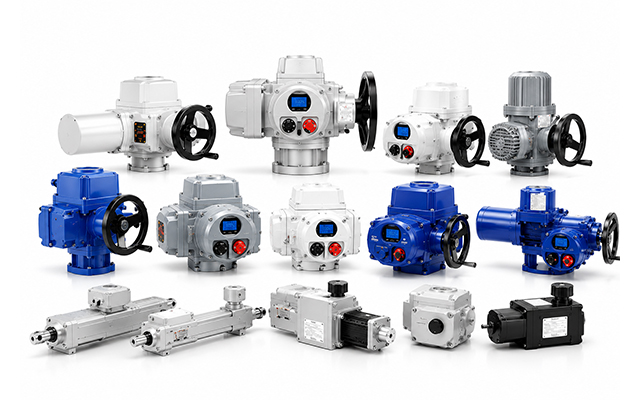
Actuators are devices used to automatically operate valves by converting energy into mechanical motion. They can be electric, pneumatic, hydraulic, or gears, and are designed to open, close, or regulate valve positions with high precision. Actuators improve operational efficiency, ensure process safety, and enable remote and intelligent flow control in modern pipeline applications.
Actuators are devices used to automatically operate valves by converting energy into mechanical motion. They can be electric, pneumatic, hydraulic, or gears, and are designed to open, close, or regulate valve positions with high precision. Actuators improve operational efficiency, ensure process safety, and enable remote and intelligent flow control in modern pipeline applications.
All Types of Actuators
Electric Actuators
Pneumatic Actuators
Hydraulic Actuators
Gears
Electric Actuators
Convert electrical energy into precise valve motion control.
Pneumatic Actuators
Hydraulic Actuators
ONE-STOP ACTUATOR SUPPLY SOLUTIONS FOR GLOBAL PROJECTS
Provide integrated sourcing of electric, pneumatic, and hydraulic actuators for global industrial projects
Ensure stable quality consistency through strict manufacturing control, inspection, and full material traceability
Support international standards such as ISO, CE, and project-specific engineering requirements
Offer technical support for actuator selection, torque matching, and valve automation integration
Reduce procurement complexity by consolidating multiple actuator types under one reliable supplier
Improve project efficiency with coordinated production planning and on-time global delivery
Support EPC contractors with customized actuator solutions for large-scale engineering projects
Hot Selling Actuators in SAVVY
FAQs of Actuators Supply Chain
How does quality control impact actuator supply consistency?
Strict inspection, torque testing, pressure testing, and traceability systems ensure stable quality and reduce rework or shipment delays.
What affects actuator supply chain lead time in industrial projects?
Actuator supply chain lead time depends on raw material availability, production capacity, customization requirements, testing procedures, and international logistics conditions. For EPC and industrial projects, complex specifications may also extend delivery cycles.
How does an actuator work with a valve?
An actuator connects to a valve and drives its opening or closing by rotating or linear motion. It enables automated flow control without manual operation.
How do I choose the right actuator for my application?
Key selection factors include torque requirements, operating pressure, valve type, control method, environmental conditions, and safety requirements.
Do actuators require regular maintenance?
Yes, regular inspection, lubrication (if required), and performance testing help ensure long service life and reliable operation in industrial environments.
Introduction
Worm gear linear actuators are used in various industrial applications due to their high precision, high load capacity, and self-locking capability. In this article, we will explore...