
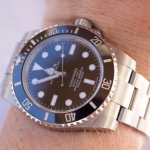



Buying a Rolex is a significant investment, whether you are purchasing a modern model, a vintage reference, or a pre-owned timepiece. Unfortunately, the popularity and value of Rolex watches have also made them a frequent target for counterfeiters. Fake Rolex watches can range from obvious replicas to sophisticated counterfeits that are difficult to distinguish from genuine examples without professional inspection.
Knowing how to tell if Rolex is fake can help buyers identify potential warning signs before completing a purchase. While visual checks can be useful, no single test can guarantee authenticity. For an expensive watch, professional authentication should always be considered.
Check the Overall Quality
The first step is to examine the watch as a whole. Rolex is known for precise manufacturing and high-quality finishing, so obvious imperfections can be an indication that something is wrong.
Look carefully at the case, bracelet, clasp, dial, and hour markers. The finishing should appear consistent, with clean edges and carefully executed details. Poorly aligned markers, uneven printing, rough edges, loose bracelet links, or cheap-looking finishing should raise questions.
However, counterfeit watches have become increasingly sophisticated. A replica may look convincing in photographs while revealing problems when examined closely in person.
Examine the Rolex Dial
The dial can provide several clues when determining whether a Rolex is genuine. Pay attention to the printing, fonts, spacing, logos, and alignment of the hour markers.
On genuine watches, Rolex lettering and other dial details are precisely produced. Text should generally be sharp and properly aligned. On a counterfeit, lettering may appear too thick, too thin, uneven, or incorrectly spaced.
If the watch has a date display with the famous Cyclops magnification lens, examine the magnification carefully. Modern Rolex watches typically provide approximately 2.5x magnification over the date, although details can vary depending on the model and reference. Poor magnification, an improperly centered date, or distorted printing may be warning signs.
Listen to the Movement
One of the most common myths about Rolex watches is that a genuine Rolex is completely silent. In reality, mechanical watches can produce audible sounds.
Many Rolex movements operate at a high frequency, resulting in a smooth-looking sweep of the seconds hand. Counterfeiters sometimes use inexpensive quartz or mechanical movements that create a noticeably different motion.
However, simply watching the seconds hand is not enough to authenticate a Rolex. Some high-quality replicas can imitate the appearance of a smooth sweep, while different genuine Rolex movements may behave differently.
The movement itself provides much more useful information, but opening the case should be left to a qualified watchmaker or authentication specialist.
Look at the Serial and Reference Numbers
Rolex watches have identification information that can help establish the model and production details. Depending on the age and reference, serial and reference numbers can be located in different areas of the watch.
These numbers should be carefully compared with the watch's documentation and known specifications.
A matching number alone does not prove that a Rolex is genuine. Counterfeiters can copy serial numbers from authentic watches and use them on fake timepieces. The numbers therefore need to be evaluated alongside the case, movement, dial, bracelet, and other components.
Inspect the Case and Rehaut
Some modern Rolex models feature Rolex branding and the serial number engraved around the inner edge of the case, known as the rehaut. The engraving should be precise and consistent with the characteristics expected for that particular reference.
Older Rolex watches may have different configurations, so buyers should avoid applying modern authentication rules to vintage watches without understanding the model's production period.
Look for clean, precise engraving rather than rough or inconsistent markings. A professional can also determine whether the markings are appropriate for the watch's reference and age.
Examine the Crown and Caseback
The Rolex crown logo is another detail worth examining. Genuine Rolex watches feature carefully manufactured crown markings, although the exact appearance can vary depending on the model and production period.
The caseback can also provide clues. Many Rolex watches have relatively clean and understated casebacks rather than elaborate visible mechanical displays. A flashy transparent caseback on a model that was not produced with one should immediately prompt further investigation.
Again, there are exceptions among vintage and specialized Rolex models, so the specific reference should always be considered.
Check the Bracelet and Clasp
The bracelet is often overlooked when people try to determine whether a Rolex is fake. Genuine Rolex bracelets are manufactured to a high standard and should feel solid, precisely constructed, and properly finished.
Check the links for excessive looseness or rough finishing. Examine the clasp and engraved markings carefully. The construction should correspond with the particular Rolex model.
A bracelet that feels unusually light, flimsy, or poorly assembled can be a warning sign. However, wear on an authentic vintage bracelet can also cause looseness, so this should not automatically be interpreted as evidence of a counterfeit.
Be Careful With the Price
An unusually low price is one of the strongest reasons to slow down and investigate further.
If a seller is offering a Rolex substantially below the typical market price without a convincing explanation, buyers should be cautious. Counterfeiters often use attractive prices to encourage buyers to make quick decisions.
A genuine Rolex can sometimes be found below prevailing market prices, particularly when the watch has significant wear or requires servicing. Nevertheless, an unusually good deal should always be independently verified before money changes hands.
Examine the Documentation
Box and papers can add useful information, but they should never be treated as definitive proof of authenticity.
Counterfeiters can reproduce warranty cards, boxes, manuals, and other accessories. Documentation should therefore be compared with the actual watch, including its reference, serial information, configuration, and production characteristics.
A reputable seller should also be willing to provide reasonable information about the watch's history and condition.
Get Professional Authentication
The safest way to determine whether an expensive Rolex is genuine is to have it examined by a qualified professional. An experienced watchmaker or reputable luxury-watch authentication specialist can inspect details that are difficult to evaluate from photographs or casual visual examination.
Professional inspection can include examination of the movement, case construction, engravings, dial, hands, bracelet, and other components. This is particularly important when buying a high-value pre-owned Rolex.
Final Thoughts
Learning how to tell if a Rolex is fake starts with understanding the details that make a genuine watch different from a counterfeit. Dial quality, case finishing, bracelet construction, engravings, movement characteristics, documentation, and pricing can all provide useful clues.
However, sophisticated replicas can successfully imitate many visible characteristics of genuine Rolex watches. No single trick, sound test, serial-number lookup, or internet guide can guarantee authenticity.
If you are considering purchasing an expensive Rolex, take your time, research the specific reference, choose a reputable seller, and have the watch professionally authenticated whenever possible. A careful approach can help protect your investment and ensure that the luxury timepiece you are buying is the genuine article.