
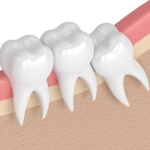

Not every wisdom tooth causes trouble, but when one gets stuck under the gum or jawbone, its angle and depth change almost everything about the extraction. Dentists don't treat every impacted molar in exactly the same way, and understanding why can take the mystery out of a procedure that sounds far scarier than it usually is.
Why the Angle of the Tooth Matters
Wisdom teeth rarely grow in straight. An X-ray usually shows one of four common positions: vertical, mesioangular, distoangular, or horizontal. A vertical tooth points upward like its neighbours and is often the simplest to remove. Mesioangular teeth lean forward into the second molar, which is actually the most frequent pattern seen in patients booking wisdom teeth removal in Melbourne. Distoangular teeth tilt backward toward the jaw joint, and these tend to be the trickiest, since the surgeon has less room to manoeuvre the tooth out without disturbing surrounding bone. Horizontal impactions lie sideways, pressing directly into the tooth beside them, and almost always call for sectioning before removal.
How Depth Changes the Approach
Angle tells half the story; depth tells the rest. A tooth sitting just below the gum line is a different job altogether from one buried deep in bone. Dentists often use the Pell and Gregory system, which grades impaction from barely covered to fully submerged. The deeper the tooth, the more bone needs to be gently reshaped to reach it, and the longer the appointment tends to run. This is one reason clinics offering wisdom teeth in Melbourne rely on detailed imaging before quoting a timeframe, rather than guessing from a quick look in the mouth.
What This Combination Means for You
A shallow, vertical tooth might come out in minutes with local anaesthetic alone. A deep, distoangular one nestled close to a nerve could call for a longer sitting, extra care around sensation in the lip and chin, and a slower healing window. Swelling, bruising, and jaw stiffness are common regardless of position, though deeper extractions generally mean a few extra days of taking it easy.
Age plays a real part too. Roots stay softer and surrounding bone more pliable through the late teens and early twenties, which is partly why dentists often suggest sorting an awkward angle sooner rather than waiting for discomfort to force the issue. Leave a mesioangular or horizontal tooth too long and the roots can wrap further around a nerve, turning a routine job into a trickier one.
Ask to see your own scan before surgery day. Seeing exactly how your tooth sits, on its side, tilted forward, or buried deep, makes the process far less daunting and helps you plan recovery with realistic expectations rather than guesswork. For learn more https://wisdomteethremoval.com.au/wisdom-teeth-removal-melbourne/