
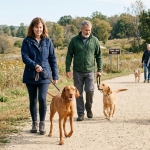

Most healthy adult dogs do well with 30 minutes to 2 hours of activity a day, and walks usually make up a large part of that. The right amount for your dog depends on age, breed, size, health, and energy level. A young Labrador and a senior Shih Tzu need very different dog walking plans, even if they live in the same house.
This guide breaks down walk length and frequency by life stage and breed type. It also covers the signs that tell you whether your dog is getting too little exercise or too much. Use these numbers as a starting point, and check with your veterinarian before making big changes.
Why walk length matters
A walk does more than burn energy. It gives your dog a bathroom break, mental stimulation from new smells and sounds, and time to practice manners around people and other dogs. Consistent dog walking also supports healthy weight, joint mobility, and digestion.
Too little activity often shows up as chewing, barking, digging, or restless pacing. Too much can lead to sore paws, joint strain, or exhaustion, especially in puppies and older dogs. The goal is a routine that leaves your dog relaxed and content, not wound up or worn out.
Dog walking guidelines by age
Age is the first factor to consider. A dog's needs change a lot from puppyhood to the senior years, and a good dog walking routine changes with them.
Puppies
Puppies have plenty of energy, but their bones and joints are still growing. Long, repetitive walks on hard surfaces can put stress on developing growth plates. Many trainers use a rule of thumb of about five minutes of structured walking per month of age, up to twice a day. A four-month-old puppy, for example, might take two walks of about 20 minutes each.
Free play on grass, short training sessions, and frequent potty breaks matter just as much at this stage. Puppy dog walking should focus on exploring, meeting the world calmly, and learning to walk on a loose leash. Distance comes later.
Large and giant breeds grow for longer than small breeds, sometimes up to 18 to 24 months. Ask your veterinarian when it is safe to increase distance for your puppy.
Adult dogs
Most adult dogs, from about one to seven years old, can handle at least two walks a day. Combined walking time often falls between 30 and 90 minutes, depending on the breed. Dog walking at this stage can include longer routes, hills, and more varied terrain, as long as your dog stays comfortable.
Split walks usually work better than one long outing. Two or three shorter walks spread through the day keep energy steady and give your dog more bathroom breaks. A mid-day walk is especially helpful for dogs who spend long workdays at home alone.
Senior dogs
Older dogs still need daily movement. Gentle activity helps keep joints flexible, muscles strong, and minds engaged. What changes is the pace and length. Senior dog walking often means shorter, slower walks, two to four times a day, with time to sniff and rest.
Watch for stiffness, lagging behind, or reluctance to go out. These can signal arthritis or another health issue. Talk to your veterinarian about pain management or adjustments, and let your dog set the pace on most days.
Dog walking guidelines by breed type
Breed history explains a lot about how much exercise a dog wants. Dogs bred to herd, hunt, or pull often need far more activity than dogs bred mainly as companions. Here is a general guide to daily dog walking and activity by breed group:
- High-energy working and herding breeds, such as Border Collies, Australian Shepherds, and Belgian Malinois: often 1.5 to 2 hours of activity a day, including walks, running, and mental work.
- Sporting breeds, such as Labrador Retrievers, Golden Retrievers, and Pointers: usually 1 to 2 hours a day, with walks plus fetch or swimming.
- Terriers, such as Jack Russell Terriers and Airedales: often 45 minutes to 1.5 hours, with plenty of sniffing and play.
- Hounds vary widely. Scent hounds like Beagles enjoy long, slow sniff walks, while sighthounds like Greyhounds often prefer short bursts of speed and plenty of rest.
- Toy and small companion breeds, such as Chihuahuas and Cavalier King Charles Spaniels: often 30 to 60 minutes a day, split into short walks.
- Giant breeds, such as Great Danes and Mastiffs: moderate walks of 30 to 60 minutes a day, avoiding hard running and jumping, especially while young.
- Flat-faced breeds, such as Bulldogs, Pugs, and French Bulldogs: shorter, slower walks of 20 to 40 minutes total, with close attention to heat and breathing.
Mixed-breed dogs often fall between categories. Look at your dog's build, energy, and behavior rather than relying only on appearance.
Energy level matters as much as breed
Two dogs of the same breed can have very different energy levels. Some Labradors would happily run for hours. Others prefer a short stroll and a long nap. Good dog walking routines are built around the individual dog in front of you.
Watch how your dog acts after a walk. A dog who settles down, naps, or lies quietly nearby has probably had enough. A dog who keeps pacing, bringing you toys, or getting into trouble may need a longer walk or a second outing. A dog who drags behind, limps, or seems unusually tired may need less.
Health conditions that change the plan
Some health issues call for a modified dog walking schedule. Dogs with heart conditions, breathing problems, joint disease, or obesity may need shorter or gentler walks. Dogs recovering from surgery usually have strict activity limits for several weeks.
Weight loss is a common reason owners increase walks. Add time gradually, over several weeks, rather than doubling the distance overnight. Sudden jumps in activity can strain muscles and joints, especially in overweight dogs.
Always follow your veterinarian's guidance when your dog has a medical condition. Share that guidance with anyone else who walks your dog.
Weather and walk length
Weather has a big effect on how long a walk should be. In hot, humid weather, shorter walks during cooler hours protect dogs from overheating and burned paws. In winter, short-coated and small dogs may need a coat and shorter outings. Ice, snow, and de-icing salt also call for paw checks after each walk.
On days when a long walk is not safe, indoor games, puzzle toys, and short training sessions help fill the gap. Mental work tires dogs out more than many owners expect.
Quality counts as much as quantity
A 30-minute walk where your dog can sniff, explore, and move at a natural pace often does more good than an hour of rushed walking on a tight leash. Sniffing engages the brain and helps dogs relax. Effective dog walking mixes steady movement with time to explore.
Variety helps too. Changing routes, adding gentle hills, and visiting new places keep walks interesting. A short training break in the middle of a walk, such as practicing sit or recall, adds mental exercise without extra distance.
Signs your dog needs more or less walking
Use your dog's behavior as feedback. These signs can help you adjust your dog walking routine:
- More walking may help if your dog chews furniture, barks constantly, digs, or cannot settle in the evening.
- More walking may help if your dog is gaining weight on a normal diet.
- Less walking may be needed if your dog limps, lags behind, or sits down and refuses to continue.
- Less walking may be needed if your dog has sore or cracked paw pads or seems stiff the next morning.
- A different type of activity may help if your dog is calm physically but still restless, which often points to a need for mental stimulation.
When a professional dog walker makes sense
Many owners know their dogs need a mid-day walk but cannot fit it into a workday. Long stretches alone can lead to accidents, boredom, and stress. Professional dog walking fills that gap with a reliable break in the middle of the day.
A good walker learns your dog's ideal pace and distance, then sticks to it. They adjust for weather, age, and health, and they let you know how each walk went. Consistency is one of the biggest benefits. Your dog knows when the walk is coming, and you know it is being handled.
Mid-day dog walking with Paw Pals Pet Sitting
Paw Pals Pet Sitting offers mid-day dog walking between 10:00 am and 4:00 pm, Monday through Friday, for dogs across Northern Virginia. Every walk is built around your dog's needs, whether that means a brisk outing for a young retriever, a slow sniff walk for a senior, or a potty break and backyard play for a puppy. Visits can include fresh water, treats, brushing, and medication when needed.
Our trained and certified sitters start with an in-person Meet and Greet to learn your dog's routine, energy level, and walking route. After each visit, you receive a personalized report so you always know how your dog is doing. We serve Centreville, Chantilly, Fairfax, Herndon, Reston, Vienna, Ashburn, Sterling, and nearby communities.