


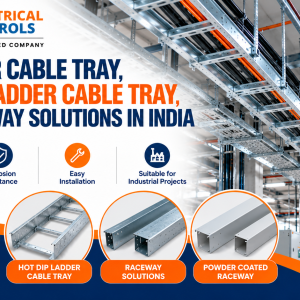
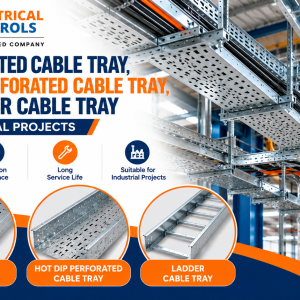
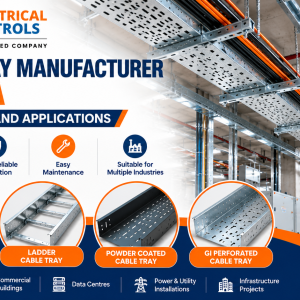


Modern buildings require an organized and reliable system for electrical cable installation. Offices, factories, hospitals, warehouses, and commercial complexes use cable management products to route cables efficiently and simplify maintenance. Perforated and powder coated cable trays are popular options for projects with different installation requirements.
Why Cable Trays Are Important
A cable tray provides a structured route for electrical cables and helps keep wiring organized. Compared with unplanned cable routing, a properly designed tray system can make inspection, identification, and maintenance easier.
Cable trays are commonly installed in ceilings, electrical rooms, industrial plants, service corridors, and commercial buildings. Their design and material should match the electrical load and operating environment.
Benefits of Perforated Cable Tray
A perforated cable tray has openings along its base and may also feature perforations in other sections, depending on the design. These openings support airflow and provide practical options for cable arrangement.
Key benefits include:
- Organized routing for multiple cables.
- Ventilation around supported cables.
- Convenient inspection and maintenance.
- Availability in different widths and side heights.
- Compatibility with suitable bends, tees, reducers, and accessories.
The tray should be selected according to cable loading, support spacing, and the manufacturer's specifications.
Why Consider Powder Coated Cable Tray?
A powder coated cable tray has a surface finish applied to the metal after suitable preparation. It is available in different colours and can provide additional protection against surface wear and corrosion when the coating is appropriate for the application.
Powder coated trays are often considered for commercial installations, indoor electrical systems, and projects that require a particular finish. For outdoor or chemically exposed environments, verify the coating system's suitability before purchasing.
Understanding Cable Tray Types
Different cable tray types are designed for different purposes.
- Perforated cable tray: Suitable for organized cable routing and ventilation.
- Ladder cable tray: Often used for heavier cable installations and applications requiring good airflow.
- GI cable tray: Provides a galvanized surface for corrosion resistance.
- Powder coated cable tray: Offers a coated finish selected according to the installation environment.
The most appropriate design depends on cable weight, cable type, location, maintenance access, and project requirements.
Cable Tray Price and Selection Factors
The cable tray price varies according to material, sheet thickness, dimensions, coating quality, accessories, and quantity. Buyers should compare quotations using the same technical specifications.
Before placing an order, confirm the required tray width, side height, thickness, finish, and fitting requirements. Also check the availability of bends, tees, reducers, connectors, and support brackets.
Conclusion
Perforated cable trays and powder coated cable trays provide practical options for organized electrical installations. Choosing a suitable tray system requires attention to cable loading, dimensions, surface protection, and installation conditions. A specification-based comparison helps buyers select an appropriate product for their project.
Frequently Asked Questions
- What is a perforated cable tray?
It is a metal cable support system with openings that help organize cables and support ventilation.
- Is powder coated cable tray suitable for outdoor use?
It can be suitable when the coating system and material are designed for the outdoor environment. Confirm the required corrosion protection before installation.
- What determines cable tray price?
Tray dimensions, metal thickness, material, finish, accessories, and order quantity influence the price.
- Which cable tray types are suitable for industrial buildings?
Perforated, ladder, galvanized, and appropriately coated trays may be suitable depending on cable loading and site conditions.
- What should I check before ordering a cable tray?
Check dimensions, material, thickness, finish, load requirements, fittings, and delivery specifications.