


Manufacturing companies need more than advanced machinery to achieve consistent product quality and efficient production. They also require the right tools to position components accurately, simplify repetitive operations, and maintain reliable manufacturing standards. Fixture Design Services in India help businesses develop application-specific workholding solutions that support these objectives. Robomatics Automation works in industrial automation, customized fixture design, special purpose machines, and robotic integration, helping manufacturers explore practical solutions for their production requirements. Well-engineered fixtures can make manufacturing processes more repeatable, adaptable, and suitable for changing industrial demands.
The Connection Between Fixture Design and Product Quality
Product quality depends on several factors, including material selection, machine performance, operator procedures, and the accuracy of each manufacturing operation. Component positioning is another important factor that can influence the final result.
When a workpiece moves or becomes incorrectly aligned during machining, welding, or assembly, the finished component may not meet the required specifications. Repeated manual positioning can also introduce variations between production cycles.
Industrial fixtures help address these challenges by providing defined locating points and suitable clamping arrangements. They hold components in the required position while manufacturing operations are performed, helping reduce unwanted movement and improve repeatability.
For manufacturers producing components in large quantities, repeatable positioning can make quality checks more consistent and help identify process variations earlier.
Designing Fixtures for Flexible Manufacturing
Customer requirements, product designs, and production volumes can change over time. A fixture designed for only one component may become less practical when a manufacturer introduces new product variants or modifies an existing production line.
Flexible fixture design helps businesses prepare for these changes.
Modular Fixture Systems
Modular fixtures use compatible components such as base plates, locators, supports, clamps, and positioning elements. Depending on the application, these components can be rearranged to accommodate different workpieces.
This approach can reduce the need to develop an entirely new fixture for every compatible product variation. However, each configuration must still meet the necessary positioning, rigidity, and accuracy requirements.
Adjustable Workholding Solutions
Adjustable fixtures can accommodate selected variations in component size or geometry. They may be useful in manufacturing environments where several similar parts share a production process.
The design must balance flexibility with repeatability. Excessive adjustment can increase setup complexity, so locating features and adjustment procedures should be clearly defined.
Fixtures for Product Changeovers
When production shifts from one component to another, setup time can affect overall equipment utilization. Fixtures designed with accessible clamping points, clearly defined locating features, and practical changeover arrangements can make these transitions more manageable.
Manufacturers should evaluate changeover frequency and production requirements before deciding between dedicated, modular, and adjustable fixture systems.
Key Stages in the Fixture Design Process
A systematic development process helps ensure that the final fixture suits the intended application.
- Requirement analysis
The process begins with understanding the workpiece, manufacturing operation, production volume, required tolerances, machine limitations, and operator requirements. Existing production difficulties should also be identified.
- Concept development
Engineers determine how the component will be located, supported, and clamped. They also consider tool access, loading and unloading, operator visibility, and possible interference with surrounding equipment.
- CAD modelling and design review
Computer-aided design tools can be used to create three-dimensional models, review component clearances, and assess the relationship between the fixture and the workpiece. Design reviews help identify potential issues before fabrication.
- Material and component selection
The selection of fixture materials and hardware depends on operating forces, wear, environmental conditions, expected service life, and budget. Clamps, locating pins, supports, and other elements must be appropriate for the application.
- Fabrication and assembly
Once the design is approved, the fixture can be manufactured and assembled according to the engineering specifications. Critical dimensions and locating surfaces require suitable quality checks.
- Testing and validation
The completed fixture should be evaluated under representative operating conditions. Validation may include positioning checks, trial production, accessibility reviews, repeatability assessments, and verification of any required safety measures.
Following these stages helps manufacturers address design problems before the fixture becomes part of routine production.
Fixture Design for Different Industrial Processes
Different manufacturing operations require different approaches to workholding.
Automotive Component Manufacturing
Automotive production often involves repetitive machining, welding, and assembly operations. Fixtures help maintain component orientation and support consistent processing of brackets, housings, frames, and other parts.
Sheet-Metal Fabrication
Sheet-metal components can be susceptible to movement or distortion during fabrication. Appropriate fixture arrangements help position parts for welding, drilling, and assembly while providing access to the required working areas.
Precision Machining
Machining fixtures must hold components securely while allowing the cutting tool to reach the required surfaces. The design should consider cutting forces, workpiece rigidity, locating accuracy, and chip clearance.
Industrial Equipment Assembly
Fixtures can assist with positioning and aligning mechanical components during assembly. They can also help standardize repetitive fitting and fastening procedures.
Robotic Manufacturing Cells
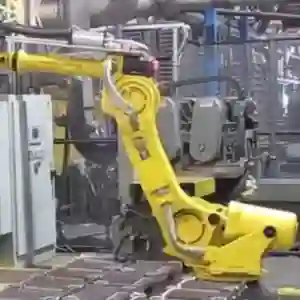
Automated production systems require fixtures that are compatible with robot movement, component pickup, tool access, and the sequence of operations. Depending on the application, sensors or powered clamping mechanisms may be incorporated to support automated workflows.
How Fixture Design Contributes to Quality Assurance
Quality assurance is more effective when manufacturing processes are repeatable and inspection procedures use consistent reference points.
Inspection fixtures help position components in a defined orientation during measurement. This can reduce variation caused by inconsistent manual placement and make comparisons between components more meaningful.
Fixtures can also support process standardization by establishing clear workpiece locations and repeatable operating procedures. When combined with suitable inspection equipment and documented quality checks, they contribute to a more controlled manufacturing process.
It is important to remember that fixtures do not guarantee defect-free products on their own. Their effectiveness depends on correct design, suitable fabrication, maintenance, operator training, and the overall quality-control system.
Choosing a Suitable Fixture Design Partner
Selecting the right provider involves more than comparing quotations. Manufacturers should assess whether a potential partner understands their application and can develop a solution that works with their existing production environment.
Consider these factors before starting a project:
- Experience with the relevant manufacturing process.
- Ability to interpret engineering drawings and component specifications.
- Knowledge of locating, clamping, and workpiece accessibility.
- CAD design and engineering review capabilities.
- Compatibility with existing machinery and robotic systems.
- Practical maintenance, adjustment, and changeover requirements.
- Availability of appropriate testing and validation procedures.
Robomatics Automation is an option for businesses exploring customized fixture design alongside industrial automation, special purpose machines, robotic systems, machine tending, material handling, and system integration. Discussing the production challenge, component requirements, and desired outcomes helps establish whether a proposed solution is suitable.
Preparing Manufacturing Facilities for Future Demands
Modern factories increasingly need production systems that can handle product variation, maintain consistent quality, and integrate with automation. Fixture design plays a supporting role in this transition by connecting the workpiece to the manufacturing equipment in a repeatable manner.
Modular workholding, CAD-based development, sensor-assisted clamping, and robotic integration can help manufacturers build more adaptable production processes when these technologies match their actual requirements.
Planning for future product changes and maintenance needs during the design stage can also reduce avoidable redesign work later.
Conclusion
Fixture Design Services in India help manufacturing businesses improve workpiece positioning, product consistency, process repeatability, and production flexibility. From precision machining and sheet-metal fabrication to inspection and robotic manufacturing, the right fixture design can support reliable operations across multiple industrial applications.
Businesses should evaluate their production needs carefully and select solutions that balance accuracy, accessibility, flexibility, safety, and long-term usability. Robomatics Automation can help manufacturers explore fixture design and industrial automation options aligned with their production goals.
Looking for a fixture solution for your manufacturing process? Contact Robomatics Automation to discuss your application and explore suitable industrial fixture design options.
Frequently Asked Questions
- What is the purpose of industrial fixture design?
Industrial fixture design creates devices that locate, support, and hold workpieces during manufacturing. Fixtures help improve positioning consistency and support repeatable machining, welding, assembly, and inspection processes.
- What is the difference between a dedicated fixture and a modular fixture?
A dedicated fixture is designed for a particular component or operation, while a modular fixture uses compatible components that can be rearranged for suitable applications. The best choice depends on product variation, accuracy requirements, and changeover frequency.
- How can fixtures help improve quality control?
Fixtures provide repeatable component positioning during manufacturing and inspection. This can reduce positioning variation and help make measurements and production results more consistent.
- Can customized fixtures be used in automated production lines?
Yes. Fixtures can be designed for integration with robots, special purpose machines, and automated handling systems. The design must account for workpiece orientation, machine interfaces, tool access, cycle sequences, and operational safety.
Author Bio
The author covers industrial engineering, fixture development, manufacturing quality, and automation technologies. The goal is to provide useful information that helps businesses understand engineering approaches for improving production consistency and adapting to evolving manufacturing requirements.
Hashtags
#FixtureDesignServicesInIndia #IndustrialFixtureDesign #ManufacturingQuality #FlexibleManufacturing #FixtureEngineering #QualityAssurance #RoboticAutomation #IndustrialEngineering #RobomaticsAutomation