
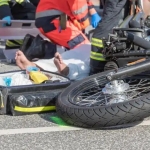





Glendale's mild weather and central location make it a popular place to ride, whether commuting on the 134 and 5, running errands along Brand Boulevard, or heading into the foothills toward Angeles Crest Highway. Riders share the road with heavy commuter traffic, freeway interchanges, and busy commercial corridors near the Americana and the Galleria, and that combination creates real risk. A motorcycle offers none of the protection a car provides, so when a driver fails to see a rider, the results are often severe.
If you were hurt while riding in Glendale, a Glendale motorcycle accident lawyer can help you fight back against insurance company bias toward riders and pursue full compensation for your injuries.
Why Motorcycle Accidents Cause Such Severe Injuries
A motorcycle has no frame, no airbags, and no seat belt. Even a relatively low-speed collision can throw a rider from the bike or into another vehicle, and the rider's body absorbs the impact directly. Common injuries include:
- Traumatic brain injuries, even when a helmet was worn
- Spinal cord injuries and paralysis
- Road rash, which can be severe enough to require skin grafts
- Broken bones, particularly in the legs, arms, and collarbone
- Internal organ damage and internal bleeding
- Amputations, in severe cases
- Fatal injuries
Because these injuries are often so serious, motorcycle claims tend to involve higher stakes and longer recoveries than the average car accident case.
Common Causes of Motorcycle Accidents in Glendale
- Left-turn collisions, where a driver turns in front of an oncoming motorcycle, misjudging its speed or not seeing it at all
- Lane-change accidents, where a driver fails to check blind spots before merging into a motorcycle's lane
- Following too closely, leading to rear-end collisions in the frequent stop-and-go traffic near the 134/5 interchange
- Dooring, when a parked car's door opens into a rider's path, particularly common on streets with heavy parking like Brand Boulevard
- Distracted driving, including phone use that delays a driver's recognition of a motorcycle in traffic
- Road hazards, such as potholes, debris, or uneven pavement, which pose a much greater danger to a two-wheeled vehicle than a car
- Speeding and unsafe passing
- Impaired driving
- Drivers pulling out of driveways or parking lots near the Americana and Galleria without checking for approaching riders
The Bias Against Motorcyclists
One of the biggest obstacles riders face after a crash isn't the accident itself, but the assumptions insurance adjusters, and sometimes jurors, bring to the case. Common biased assumptions include:
- "Motorcyclists are reckless." Many people assume a rider was speeding or weaving through traffic, even when the evidence shows the rider was operating safely and the other driver was at fault.
- "The rider should have seen the car coming." This ignores the reality that many drivers simply fail to look for motorcycles or misjudge their speed and distance, a well-documented phenomenon.
- "No helmet, no case." While helmet use can affect certain damages, it does not automatically eliminate a claim or mean the rider was at fault for causing the crash itself.
- "Riders accept the risk." Choosing to ride a motorcycle doesn't mean accepting the risk of another driver's negligence.
These assumptions can lead insurers to offer lower settlements to injured riders than they would to an injured driver with comparable injuries, purely based on the type of vehicle involved. Fighting this bias with clear, well-documented evidence is central to many motorcycle accident cases.
California's Helmet Law and How It Affects a Claim
California requires motorcycle riders and passengers to wear a helmet. If you weren't wearing one at the time of a crash, this doesn't automatically bar your claim, but it can become relevant to certain damages. If a head injury is part of your claim, an insurer may argue that a lack of a helmet contributed to the severity of that specific injury, potentially affecting compensation for that portion of your damages under California's comparative negligence rules. It generally does not affect claims for injuries unrelated to the head, such as a broken leg or road rash.
Lane Splitting in California
California is unique in explicitly permitting lane splitting, where a motorcyclist rides between lanes of slower or stopped traffic. When done safely and reasonably, lane splitting is legal and does not automatically make a rider at fault for a resulting collision. On Glendale's congested freeway approaches and interchange areas, lane splitting is common, and insurers may still try to argue it was performed unsafely or at an excessive speed differential. Understanding how the California Highway Patrol's lane-splitting safety guidelines apply to the specific facts of your accident can matter if this issue comes up in your case.
Freeway and Interchange Risks
The interchange where the 134, 5, and 2 meet creates particular hazards for riders:
- Heavy merge volume from multiple directions
- Frequent lane changes as vehicles navigate to connecting freeways
- Sudden slowdowns, which are especially dangerous for a motorcycle following at speed
- Construction activity, which can shift traffic patterns with little warning
- Reduced visibility for riders navigating between larger vehicles at merge points
Riders hurt in crashes at or near this interchange should have the specific traffic conditions and driver behavior carefully investigated, since multi-vehicle involvement can complicate fault.
Comparative Negligence in Motorcycle Cases
California follows pure comparative negligence. If you're found partly at fault for the accident, your compensation is reduced by your percentage of responsibility, but not eliminated. For example, if you're found 20% at fault for a $300,000 loss, you could still recover $240,000.
Given the biases riders often face, a careful, evidence-based investigation into exactly what happened, rather than allowing assumptions to drive the fault determination, is especially important in motorcycle cases.
Evidence That Can Strengthen a Motorcycle Accident Claim
- The police collision report
- Photos and video of the scene, both vehicles, and your injuries
- Witness statements, which can be particularly valuable in countering assumptions about rider behavior
- Dash-cam or surveillance footage from nearby businesses
- Your motorcycle's damage, which can help an accident reconstructionist establish speed and point of impact
- Your gear, including your helmet, jacket, and riding boots, which can also provide evidence about the crash dynamics
- Medical records documenting your injuries
- Expert testimony from an accident reconstructionist, particularly valuable in disputed liability cases
Preserving your motorcycle and gear exactly as they were after the crash, rather than repairing or discarding them, can be important evidence.
What to Do After a Motorcycle Accident
- Call 911 and request police and medical help.
- Get medical attention immediately, even if you feel capable of walking away from the scene. Adrenaline can mask serious injuries.
- Photograph the scene: both vehicles, the road, skid marks, and your injuries and gear.
- Get the driver's information, including insurance details, and collect witness contact information.
- Do not discuss fault or apologize at the scene.
- Preserve your motorcycle and gear in their post-crash condition rather than immediately repairing or discarding anything.
- Do not give a recorded statement to an insurance company before speaking with an attorney, given how easily statements can be used to reinforce rider bias.
- Follow your treatment plan and keep all medical records and bills.
- Contact a lawyer early, particularly one experienced with motorcycle cases specifically.
Compensation You May Be Able to Recover
- Medical expenses: emergency care, surgery, rehabilitation, and future treatment
- Lost wages and loss of earning capacity
- Motorcycle repair or replacement, along with damaged gear
- Pain and suffering, emotional distress, and loss of enjoyment of life
- Wrongful death damages for surviving family members, if the crash was fatal
Insurance Considerations for Motorcyclists
California's minimum liability limits are $30,000 per person and $60,000 per accident for injuries, and $15,000 for property damage. Given the severity of many motorcycle injuries, these minimums are often far too low to cover the actual damages involved. Other sources of recovery may include:
- Your own uninsured/underinsured motorist (UM/UIM) coverage, which can be especially important for riders given how often at-fault drivers carry only minimum coverage
- Medical payments coverage
- Employer or commercial policies, if the at-fault driver was working
Deadlines to Keep in Mind
- Personal injury lawsuits: generally two years from the date of the accident
- Property damage claims: generally three years
- Claims against government entities: generally six months for the initial claim, for example if a road hazard contributed
- Wrongful death claims: generally two years from the date of death
How a Glendale Motorcycle Accident Lawyer Can Help
An experienced attorney who handles motorcycle cases can:
- Investigate the crash and push back against assumptions of rider fault
- Work with accident reconstruction experts to establish what actually happened
- Preserve your motorcycle, gear, and other time-sensitive evidence
- Identify every applicable insurance policy, including your own UM/UIM coverage
- Calculate the full value of your current and future losses
- Negotiate firmly against lowball offers rooted in bias against riders
- File suit and pursue the case through trial if necessary
Many personal injury firms work on a contingency fee basis, meaning you typically pay no attorney fees unless you recover compensation. Confirm the terms during your consultation.
Hurt While Riding in Glendale? Get a Fair Evaluation
Motorcyclists deserve the same fair treatment as any other injured accident victim, not a discounted settlement based on outdated stereotypes about riders. If you were hurt in a motorcycle accident in Glendale, contact a Glendale motorcycle accident lawyer to talk through what happened and pursue the compensation you actually deserve.
This article is for general informational purposes only and is not legal advice. Traffic laws, insurance requirements, and filing deadlines can change, and every case depends on its own facts. Consult a licensed attorney about your specific situation.