


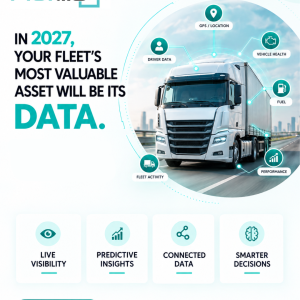
Home healthcare depends on people reaching patients at the right time. Nurses, doctors, therapists, caregivers, and medical support teams may travel between homes, clinics, pharmacies, and treatment centers throughout the day. When schedules change or an urgent visit is added, managers need to know which mobile team is available and where they are already working. GPS Tracking Software can help UAE healthcare providers improve visibility over their service vehicles and coordinate home visits more efficiently.
For healthcare businesses operating across Dubai, Abu Dhabi, Sharjah, Ajman, and Fujairah, the challenge is not simply getting a vehicle to an address. The operation needs reliable scheduling, safe driving, accurate travel information, vehicle availability, and enough flexibility to handle unexpected patient requirements.
Why Is Home Healthcare Fleet Management So Challenging?
Home healthcare schedules can change during the day.
A nurse may have several routine visits planned, but a patient could require an urgent follow-up. A therapist may finish a visit later than expected. Another caregiver may be delayed by traffic.
At the same time, the operations team still has to make sure scheduled appointments are not overlooked.
This makes location and availability important.
When dispatchers rely completely on calls and messages, they may spend a large part of the day trying to understand where each vehicle is and whether a team can take another assignment.
A connected fleet can reduce some of that uncertainty.
Can a Fleet Management System Help Healthcare Dispatchers?
A modern Fleet Management System can give healthcare operations teams a centralized view of their connected vehicles.
Managers can review available information to understand which vehicles are moving, which are available, which have reached patient areas, and which are returning to a clinic or office.
This can be useful when an urgent visit comes in.
For example, a healthcare provider in Dubai receives a request from a patient who needs a same-day visit. The dispatcher can review current vehicle activity and identify teams already operating nearby.
That does not automatically determine who should be sent. Patient needs, staff qualifications, workload, and scheduling still matter.
But better fleet visibility gives the dispatcher more information before making the assignment.
How Can Fleet Management Software Improve Home Visit Scheduling?
Fleet Management Software can support the transportation side of home healthcare operations.
A provider may coordinate:
- Nursing visits
- Physiotherapy appointments
- Elder-care services
- Medical equipment deliveries
- Pharmacy-related trips
- Follow-up visits
- Emergency support
- Staff transportation
These appointments can occur across widely distributed locations.
A schedule that looks efficient in the morning may become difficult after just a few changes.
Fleet visibility can help managers understand whether a team is still on schedule and whether a new assignment is realistic.
It can also help reveal where long travel times are affecting the number of visits a mobile team can complete.
Can a GPS Tracker for Car Help Monitor Healthcare Service Vehicles?
Many home healthcare teams travel in cars because they need to move quickly between residential locations.
A gps tracker for car can help managers understand how these vehicles are moving throughout the working day.
This can provide useful operational information such as:
- Whether a vehicle has started the assigned journey
- Whether the vehicle has reached the patient area
- Whether an unexpected stop has occurred
- Whether the team has started travelling to the next visit
- Whether the vehicle has returned to base
This can also reduce the need for staff to repeatedly call drivers for routine location updates.
Healthcare organizations should establish clear policies around tracking, privacy, and access to location information.
Can a GPS Tracker for Vehicle Help Protect Medical Service Vehicles?
Home healthcare vehicles may carry medical supplies, equipment, documentation, or other valuable items.
A GPS Tracker for Vehicle can provide another layer of visibility into vehicle movement.
Healthcare providers can establish geofences around:
- Clinics
- Hospitals
- Offices
- Warehouses
- Pharmacies
- Service areas
If a vehicle moves outside an expected area, management can review the situation and, depending on system configuration, receive an alert.
Tracking does not replace security procedures or patient-data protections. It simply provides additional operational awareness.
Can Fleet Technology Help Healthcare Providers Handle Urgent Visits?
Urgent home visits are one of the biggest tests of a mobile healthcare operation.
A patient may need immediate attention, while all available nurses or medical teams are already assigned.
The dispatcher needs to know whether anyone is nearby and whether rerouting them would create a bigger problem elsewhere.
Connected fleet visibility can help with that decision.
Suppose one nurse has just completed a home visit in Sharjah and another urgent request comes from a nearby location. The dispatcher can see where the vehicle is and assess whether the nurse can reasonably take the next assignment.
This can make emergency coordination more structured.
How Does Driver Behavior Affect Home Healthcare Operations?
Healthcare vehicles often carry staff who are travelling between appointments throughout the day.
Safe and comfortable driving matters because drivers may be under pressure to reach the next patient on time.
Harsh braking, aggressive acceleration, excessive idling, and unnecessary route deviations can create safety and efficiency concerns.
Managers can review available driving information and identify patterns that may require coaching.
The objective should be safer, smoother driving rather than simply faster travel.
A healthcare provider benefits when its mobile teams arrive safely and with enough time to focus on patient care.
Why Is Preventive Maintenance Important for Healthcare Vehicles?
A vehicle breakdown can affect several patients, not just one appointment.
If a nurse's vehicle becomes unavailable, appointments may need to be reassigned. Another vehicle may have to travel farther, creating additional delays.
Preventive maintenance can help healthcare organizations reduce the chance of avoidable disruptions.
Managers can track servicing, inspections, tire checks, and other maintenance requirements so vehicles receive attention before problems affect the schedule.
This is especially important for fleets that operate throughout the day and cover multiple emirates.
Can a Car Tracker Help Healthcare Providers Improve Vehicle Utilization?
A Car Tracker can help managers understand how heavily individual healthcare vehicles are being used.
One vehicle may complete many home visits while another remains underutilized because it serves a different area or specialist team.
Historical activity can help management see whether vehicles and staff are distributed appropriately.
For example, a provider may discover that one part of Dubai has much higher visit demand than another area.
That may support a decision to reposition vehicles or adjust team coverage.
Better utilization can sometimes increase operational capacity without immediately increasing the size of the fleet.
Can Vehicle Tracking Software Improve Patient Appointment Coordination?
The patient usually does not care which vehicle-management platform the provider uses.
They care about whether the healthcare professional arrives when expected.
Vehicle tracking software can give operations and customer-service teams additional information about vehicle progress.
For example, if a patient calls asking whether the nurse has left the previous appointment, the office may be able to review available vehicle activity before contacting the field team.
This can make communication more efficient.
The data should be used carefully. Vehicle location can help indicate movement, but it does not confirm the clinical activity taking place during a visit.
Can Fleet Data Help Reduce Unnecessary Travel Between Patients?
Travel can consume a significant portion of a home healthcare worker's day.
Not all travel is avoidable, but poor scheduling can create unnecessary cross-city journeys.
A provider may have several patients located close to each other, yet appointments are assigned in a way that forces repeated trips through the same area.
Historical fleet activity can help managers identify these patterns.
For example, if several regular home visits are concentrated in one neighborhood, scheduling them within the same geographic window may reduce travel between appointments.
The goal is not to prioritize distance over patient needs.
Clinical requirements, staff qualifications, appointment timing, and patient preference still need to come first.
Fleet data simply helps expose where scheduling may be creating avoidable movement.
Can Geofencing Support Home Healthcare Operations?
Geofencing can be useful for organizations with recurring service locations.
A healthcare provider can establish virtual boundaries around clinics, offices, pharmacies, and other operational sites.
When vehicles enter or leave these areas, the event can be recorded and, depending on configuration, alerts can be generated.
This can help management understand when vehicles arrive at or depart from major facilities.
Geofencing can also support vehicle security and operational monitoring without requiring staff to manually record every movement.
Can Fleet Technology Help Manage Medical Equipment Deliveries?
Some home healthcare providers also deliver or collect equipment.
Wheelchairs, oxygen-related equipment, monitoring devices, mobility aids, and other supplies may move between facilities and homes.
These deliveries can become difficult to coordinate when several vehicles are operating at the same time.
Fleet visibility can help management understand where transport vehicles are and whether an equipment delivery is progressing as planned.
If a delivery is delayed, the team can investigate earlier and communicate with the patient or care team.
The technology does not manage the clinical side of the service. It supports the transportation side.
Can Fleet Data Improve Healthcare Service Planning?
Historical fleet information can help management understand how mobile care is being delivered.
Teams can examine:
- Travel patterns
- Vehicle utilization
- Appointment-area concentration
- Repeated delays
- Idle periods
- Maintenance requirements
- Common operating zones
These patterns can support planning decisions around staffing, vehicle allocation, branch locations, and service coverage.
For example, if a provider is consistently receiving high demand in one area of Abu Dhabi, management may consider whether additional field resources should be positioned nearby.
This is a more data-informed approach than relying entirely on assumptions.
Can Better Fleet Visibility Improve Patient Communication?
A patient waiting for a home visit generally wants clear information.
“Has the nurse started the journey?”
“Is there a delay?”
“When should I expect the visit?”
Better vehicle visibility can help the office team answer transportation-related questions more accurately.
If a vehicle has not yet left a previous appointment, the provider can recognize that the next visit may need to be adjusted.
Good communication is especially important in healthcare because patients may already be dealing with stress or uncertainty.
Vehicle visibility can support the operational side of that communication.
Can Fleet Technology Help Manage Multiple Healthcare Branches?
Healthcare providers may operate clinics and service teams across different UAE locations.
A company can have home healthcare teams in Dubai while also serving patients in Abu Dhabi, Sharjah, or Ajman.
When each location manages vehicles separately, senior management may struggle to understand the overall fleet situation.
Centralized fleet visibility can help provide a broader picture.
Managers can see where vehicles are operating and assess whether resources are balanced across branches.
This can support fleet transfers, maintenance scheduling, and emergency resource planning.
Can Fleet Technology Support Better Healthcare Fleet Cost Control?
Vehicle-related costs can come from several areas:
- Fuel
- Maintenance
- Mileage
- Driver time
- Vehicle downtime
- Underused assets
These costs often appear in different parts of the business.
Fleet data can help connect them.
For example, unusually high mileage may be related to appointment scheduling rather than patient demand. Repeated idle periods may be linked to delays between visits.
Understanding the cause is more useful than simply trying to reduce the expense.
The data gives management something concrete to investigate.
Can Fleet Technology Help Healthcare Businesses Plan Growth?
As a home healthcare company expands, its mobile fleet usually grows with it.
But more vehicles do not automatically solve every operational problem.
Before expanding the fleet, management can review existing utilization and identify whether current vehicles are distributed efficiently.
Some may be heavily used. Others may have spare capacity.
The company can then consider whether it needs additional vehicles, different service territories, more centralized dispatch, or a change in scheduling.
Fleet data can support those discussions with actual operational history.
Can White-Label GPS Technology Create Opportunities for Healthcare Technology Providers?
The opportunity also extends to companies that provide technology to healthcare businesses.
Healthcare software providers, IT companies, mobility platforms, telematics businesses, and medical logistics providers can create their own branded tracking services using White Label GPS Tracking Software.
A technology provider could offer a branded platform to home healthcare organizations that need vehicle visibility, field-team coordination, maintenance management, and operational reporting.
This can help a provider expand its service portfolio without having to develop the complete GPS platform independently.
For companies already serving healthcare organizations, connected fleet technology can become a natural extension of their existing services.
What Should UAE Home Healthcare Providers Look for in Fleet Technology?
The right platform should support both routine appointments and urgent field activity.
Businesses should consider:
- Real-time vehicle visibility
- Historical trip information
- Geofencing
- Driver behavior monitoring
- Alerts
- Maintenance management
- Mobile access
- Reporting
- Hardware compatibility
- Multi-location support
- Scalability
Healthcare providers should also pay close attention to privacy, data-access controls, internal policies, and how vehicle information is handled.
Technology should support patient-service operations without creating unnecessary complexity.
How Can Flotilla IoT Support Home Healthcare Fleets?
Flotilla IoT provides connected fleet technology designed to help businesses improve vehicle visibility and operational control.
Home healthcare providers can use fleet technology to monitor service vehicles, support dispatch decisions, manage maintenance, review driver activity, improve route visibility, and coordinate mobile teams across multiple locations.
For technology providers, the white-label model can also provide a foundation for creating a branded GPS and fleet-management service for healthcare and other field-service markets.
The objective is straightforward: give managers better visibility into the vehicles supporting their mobile workforce so they can make more informed operational decisions.
Ready to Improve Your Home Healthcare Fleet?
Home healthcare depends on reliable movement. A patient may need a professional at home, a piece of equipment may need to be delivered, or an urgent visit may need to be arranged with little notice.
When managers can see where vehicles are, how they are being used, and which resources are available, they can coordinate those operations more effectively.
Connected fleet technology can help healthcare providers improve scheduling, vehicle utilization, maintenance, security, and communication while keeping patient needs at the center of the process.
Book a personalized Flotilla IoT demo and discover how smarter fleet technology can help your UAE home healthcare business improve field-team coordination, vehicle visibility, preventive maintenance, response planning, and operational control.