
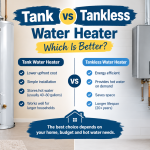

Tank vs Tankless Water Heater: Which Is Better?
If you are comparing tank vs tankless water heater which is better, there is no universal winner. The right choice depends on household demand, available space, energy goals, installation requirements, budget, and how the home uses hot water. San Jose homeowners also have to consider local conditions and the long-term cost of ownership.
How Conventional Tank Water Heaters Work
A conventional storage tank keeps a supply of heated water ready for use. Its biggest advantage is familiarity: the technology is widely understood, replacement options are common, and the stored volume can handle periods of simultaneous demand within the tank's capacity. The tradeoff is that the system must keep water hot even when nobody is using it.
Tankless Water Heaters Explained
Tankless units heat water as it is needed instead of storing a large volume. This can reduce standby heating losses and provide continuous hot water when the system is properly sized. However, installation requirements and upfront costs can be higher, and the unit must be matched to the home's flow-rate demands.
Tankless Water Heater Pros and Cons
The main advantages include on-demand heating, compact equipment, and the potential for reduced standby losses. Potential disadvantages include higher upfront installation requirements, flow-rate limitations when several fixtures operate simultaneously, and the need for appropriate electrical, gas, venting, or plumbing infrastructure depending on the model.
Heat Pump Water Heaters in California
A heat pump water heater moves heat from surrounding air into the water rather than relying solely on conventional electric resistance heating. For homeowners researching a heat pump water heater California options may be worth comparing, especially when energy efficiency is a major consideration. The actual fit depends on available space, climate, installation conditions, and household hot-water needs.
Tank vs Tankless vs Heat Pump: Key Differences
Energy Efficiency
Tankless systems can reduce standby losses, while heat pump systems can be highly efficient because they transfer heat rather than creating all of it through resistance. Conventional tanks remain a familiar option and may make sense where simplicity and predictable operation are priorities.
Hot Water Capacity
A storage tank has a defined reservoir. Tankless systems can continue producing hot water as long as demand stays within their rated flow and input capacity. Heat pump units generally store heated water in a tank, so household demand and recovery time still matter.
Space and Installation
Tankless equipment can occupy less wall or floor space, but the installation can require changes to gas, electrical, venting, or plumbing systems. Heat pump units need suitable clearance and airflow. A conventional tank also needs appropriate installation space and connections.
Upfront Cost and Long-Term Value
Tankless vs tank cost comparisons should include more than the purchase price. Installation changes, maintenance, energy use, expected service life, and replacement timing all affect long-term value. A lower upfront price is not automatically the lowest total cost over the life of the system.
Is a Tankless Water Heater Worth It?
Whether a tankless system is worth it depends on the home's usage and the owner's priorities. A household that values continuous hot water and compact equipment may find the investment attractive. Another home may benefit more from a conventional tank or an efficient heat pump system. The important step is matching the technology to actual demand.
Water Heater Lifespan and Hard Water
Water heater lifespan hard water conditions can be affected by mineral buildup and the quality of maintenance. Hard-water environments can contribute to deposits and reduced efficiency over time. The impact varies by equipment, water chemistry, usage, and maintenance, so lifespan should be treated as an estimate rather than a guarantee.
Which Water Heater Is Best for a Family?
The question which water heater is best for a family should start with household demand. Consider the number of occupants, simultaneous showers, laundry, dishwashing, available space, fuel type, and future household changes. A system sized around real usage is more useful than choosing a technology based only on its marketing advantages.
Questions to Ask Before Replacing a Water Heater
Ask how much hot water the household actually uses, what energy source is available, whether the current installation can support the preferred technology, what maintenance is required, and what the expected operating costs may be. A professional assessment can also identify whether repair is reasonable or replacement makes more sense.
When Professional Installation Makes Sense
Water-heater replacement involves more than disconnecting one appliance and connecting another. The equipment needs to be correctly sized and installed according to applicable requirements. Homeowners comparing replacement options can review professional water heater repair and installation services when they need help evaluating repair versus replacement.
Frequently Asked Questions
Is a tankless water heater always more efficient than a tank?
Not automatically in every household. Efficiency depends on usage, equipment, sizing, energy source, and installation. Tankless systems can reduce standby losses, but the best choice depends on the whole system.
How do I compare tankless and tank costs?
Compare purchase price, installation, energy use, maintenance, expected service life, and any required upgrades. Looking only at equipment price can give an incomplete picture.
Should I choose a heat pump water heater in California?
It can be an attractive option for households prioritizing energy efficiency, but available space, installation conditions, household demand, and existing equipment should be evaluated first.
Final Takeaway
When asking tank vs tankless water heater which is better, focus on fit rather than a universal winner. Storage tanks, tankless systems, and heat pump water heaters each have strengths and tradeoffs. A careful comparison of household demand, installation requirements, operating costs, and long-term maintenance will lead to a more useful decision.