Why Large Industrial Sites May Need Wheeled Fire Extinguishers
Walk through a refinery, a warehouse, or a shipyard and you'll notice something handheld extinguishers just can't handle: scale. A small canister mounted on a wall works fine for a wastebasket fire in an office. It won't do much against a fuel spill fire spreading across a loading dock. That gap is exactly why so many industrial facilities rely on bigger, mobile firefighting tools instead.
The Size Problem Handheld Units Can't Solv... moreWhy Large Industrial Sites May Need Wheeled Fire Extinguishers
Walk through a refinery, a warehouse, or a shipyard and you'll notice something handheld extinguishers just can't handle: scale. A small canister mounted on a wall works fine for a wastebasket fire in an office. It won't do much against a fuel spill fire spreading across a loading dock. That gap is exactly why so many industrial facilities rely on bigger, mobile firefighting tools instead.
The Size Problem Handheld Units Can't Solve
Most portable extinguishers hold somewhere between five and twenty pounds of agent. Compare that to a wheeled fire extinguisher, which can carry anywhere from thirty pounds up to 350 pounds depending on the model. That difference isn't just about weight. It translates into longer discharge times, a stronger flow rate, and a spray that can reach a fire from a much safer distance. When flammable liquids or large stockpiles of combustible material are part of daily operations, that extra range matters.
Built for the Hazards Industrial Sites Actually Face
Chemical plants, refineries, oil rigs, and manufacturing floors don't deal in small fires. They deal in scenarios where a leak or a spark can escalate within seconds. A trolley fire extinguisher gives workers a fighting chance in those first critical minutes before emergency crews show up, buying time to protect equipment and get people clear of the area. Airports and shipping docks use them for the same reason. Large open spaces need equipment that matches the size of the risk.
One Person, Full Control
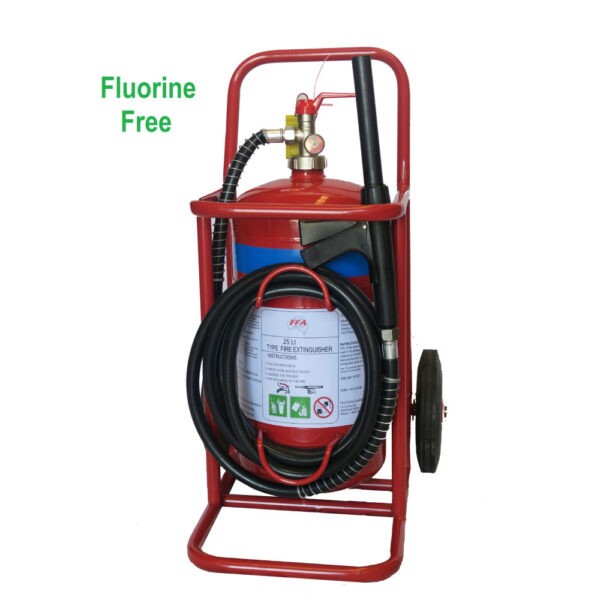
Here's the part that surprises people who've never used one: despite the bulk, these units are designed for single-person operation. Large semi-pneumatic wheels or oversized steel tires let a worker roll hundreds of pounds of equipment down an aisle, through a doorway, or across gravel without needing a forklift or a second set of hands. Reinforced hoses, sometimes stretching several meters, let the operator stay at a safer distance while still delivering a forceful stream.
What to Check Before Choosing One
Not every fire calls for the same agent. Dry chemical models handle flammable liquids and electrical fires well. CO2 units leave no residue, which matters around sensitive equipment. Facilities dealing with reactive metals need Class D protection specifically. Getting this choice right depends on what's actually stored or produced on site, not a generic checklist.
The Bottom Line for Facility Managers
A fire that outpaces available equipment rarely stays small for long. Industrial sites carry risks that standard extinguishers weren't built to handle, and the gap between a five-pound canister and a genuine industrial-scale response can decide how a bad day plays out. Matching equipment to actual hazard levels isn't overkill. It's just realistic planning for the kind of fire that's actually possible on a working industrial site.
Why Large Industrial Sites May Need Wheeled Fire Extinguishers
Walk through a refinery, a warehouse, or a shipyard and you'll notice something handheld extinguishers just can't handle: scale. A small canister mounted on a wall works fine for a wastebasket fire in an office. It won't do much against a fuel spill fire spreading across a loading dock. That gap is exactly why so many industrial facilities rely on bigger, mobile firefighting tools instead.
The Size Problem Handheld Units Can't Solv... moreWhy Large Industrial Sites May Need Wheeled Fire Extinguishers
Walk through a refinery, a warehouse, or a shipyard and you'll notice something handheld extinguishers just can't handle: scale. A small canister mounted on a wall works fine for a wastebasket fire in an office. It won't do much against a fuel spill fire spreading across a loading dock. That gap is exactly why so many industrial facilities rely on bigger, mobile firefighting tools instead.
The Size Problem Handheld Units Can't Solve
Most portable extinguishers hold somewhere between five and twenty pounds of agent. Compare that to a wheeled fire extinguisher, which can carry anywhere from thirty pounds up to 350 pounds depending on the model. That difference isn't just about weight. It translates into longer discharge times, a stronger flow rate, and a spray that can reach a fire from a much safer distance. When flammable liquids or large stockpiles of combustible material are part of daily operations, that extra range matters.
Built for the Hazards Industrial Sites Actually Face
Chemical plants, refineries, oil rigs, and manufacturing floors don't deal in small fires. They deal in scenarios where a leak or a spark can escalate within seconds. A trolley fire extinguisher gives workers a fighting chance in those first critical minutes before emergency crews show up, buying time to protect equipment and get people clear of the area. Airports and shipping docks use them for the same reason. Large open spaces need equipment that matches the size of the risk.
One Person, Full Control
Here's the part that surprises people who've never used one: despite the bulk, these units are designed for single-person operation. Large semi-pneumatic wheels or oversized steel tires let a worker roll hundreds of pounds of equipment down an aisle, through a doorway, or across gravel without needing a forklift or a second set of hands. Reinforced hoses, sometimes stretching several meters, let the operator stay at a safer distance while still delivering a forceful stream.
What to Check Before Choosing One
Not every fire calls for the same agent. Dry chemical models handle flammable liquids and electrical fires well. CO2 units leave no residue, which matters around sensitive equipment. Facilities dealing with reactive metals need Class D protection specifically. Getting this choice right depends on what's actually stored or produced on site, not a generic checklist.
The Bottom Line for Facility Managers
A fire that outpaces available equipment rarely stays small for long. Industrial sites carry risks that standard extinguishers weren't built to handle, and the gap between a five-pound canister and a genuine industrial-scale response can decide how a bad day plays out. Matching equipment to actual hazard levels isn't overkill. It's just realistic planning for the kind of fire that's actually possible on a working industrial site.
Why Large Industrial Sites May Need Wheeled Fire Extinguishers
Walk through a refinery, a warehouse, or a shipyard and you'll notice something handheld extinguishers just can't handle: scale. A small canister mounted on a wall works fine for a wastebasket fire in an office. It won't do much against a fuel spill fire spreading across a loading dock. That gap is exactly why so many industrial facilities rely on bigger, mobile firefighting tools instead.
The Size Problem Handheld Units Can't Solv... moreWhy Large Industrial Sites May Need Wheeled Fire Extinguishers
Walk through a refinery, a warehouse, or a shipyard and you'll notice something handheld extinguishers just can't handle: scale. A small canister mounted on a wall works fine for a wastebasket fire in an office. It won't do much against a fuel spill fire spreading across a loading dock. That gap is exactly why so many industrial facilities rely on bigger, mobile firefighting tools instead.
The Size Problem Handheld Units Can't Solve
Most portable extinguishers hold somewhere between five and twenty pounds of agent. Compare that to a wheeled fire extinguisher, which can carry anywhere from thirty pounds up to 350 pounds depending on the model. That difference isn't just about weight. It translates into longer discharge times, a stronger flow rate, and a spray that can reach a fire from a much safer distance. When flammable liquids or large stockpiles of combustible material are part of daily operations, that extra range matters.
Built for the Hazards Industrial Sites Actually Face
Chemical plants, refineries, oil rigs, and manufacturing floors don't deal in small fires. They deal in scenarios where a leak or a spark can escalate within seconds. A trolley fire extinguisher gives workers a fighting chance in those first critical minutes before emergency crews show up, buying time to protect equipment and get people clear of the area. Airports and shipping docks use them for the same reason. Large open spaces need equipment that matches the size of the risk.
One Person, Full Control
Here's the part that surprises people who've never used one: despite the bulk, these units are designed for single-person operation. Large semi-pneumatic wheels or oversized steel tires let a worker roll hundreds of pounds of equipment down an aisle, through a doorway, or across gravel without needing a forklift or a second set of hands. Reinforced hoses, sometimes stretching several meters, let the operator stay at a safer distance while still delivering a forceful stream.
What to Check Before Choosing One
Not every fire calls for the same agent. Dry chemical models handle flammable liquids and electrical fires well. CO2 units leave no residue, which matters around sensitive equipment. Facilities dealing with reactive metals need Class D protection specifically. Getting this choice right depends on what's actually stored or produced on site, not a generic checklist.
The Bottom Line for Facility Managers
A fire that outpaces available equipment rarely stays small for long. Industrial sites carry risks that standard extinguishers weren't built to handle, and the gap between a five-pound canister and a genuine industrial-scale response can decide how a bad day plays out. Matching equipment to actual hazard levels isn't overkill. It's just realistic planning for the kind of fire that's actually possible on a working industrial site.
A fire in a small office can spread rapidly and cause significant damage within minutes. Having the correct equipment readily available gives staff the opportunity to control a blaze before it...
Energy-conscious lighting is no longer a luxury; it’s an essential part of designing both commercial and residential spaces. The rapid advancement of LED technology has reshaped the lighting...
Fire Safety Equipment Wholesale – Bulk Deals on Extinguishers & Alarms
Fire Factory Australia is the trusted source for fire safety equipment wholesale, offering a wide range of fire extinguishers, alarms, and protection solutions to keep workplaces safe and compliant. With high-quality products at competitive prices, we ensure reliable fire protection for businesses of all sizes. Contact Fire Factory Australia today for bulk orders and great deals! Visit https://www.firefactory.com.au/ for mo... moreFire Safety Equipment Wholesale – Bulk Deals on Extinguishers & Alarms
Fire Factory Australia is the trusted source for fire safety equipment wholesale, offering a wide range of fire extinguishers, alarms, and protection solutions to keep workplaces safe and compliant. With high-quality products at competitive prices, we ensure reliable fire protection for businesses of all sizes. Contact Fire Factory Australia today for bulk orders and great deals! Visit https://www.firefactory.com.au/ for more details.
Smoke alarms are vital devices for early detection of fires, providing a crucial warning that can save lives and prevent property damage. When it comes to ensuring the safety of homes,...
Electromagnetic interference (EMI) presents a challenge for fire cables, potentially impacting their performance in critical situations. Fire cables are vital components in safety systems,...
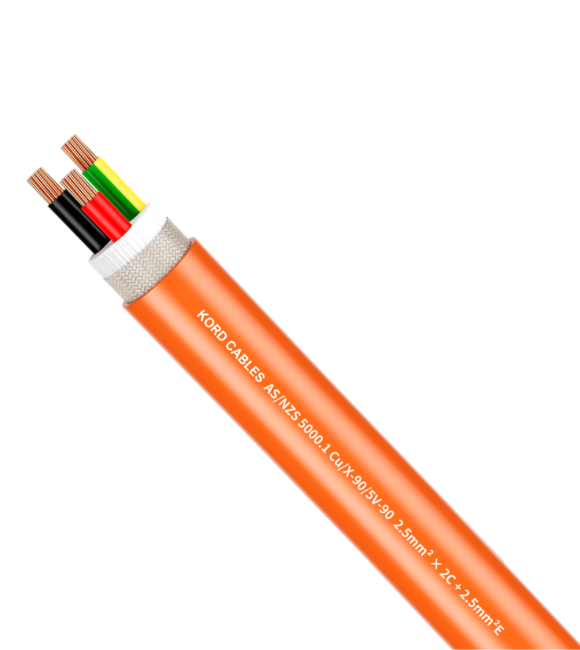
For Mains, Sub-mains and sub-circuits unenclosed, enclosed in conduit buried direct or underground ducts for buildings and industrial plants where not subject to mechanical damage. Suitable for glanding.
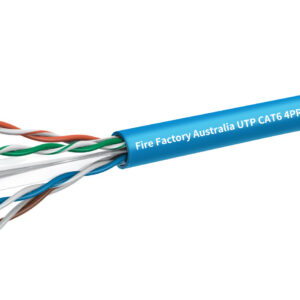
Category6 UTP Cable is a twisted pair cable for carrying signals. This type of cable is main used in structured cabling for computer networks such as Ethernet, supports a frequency range of up to 550MHz . It is also used to carry other signals such as telephony and video.