
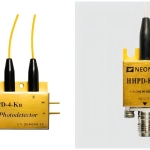
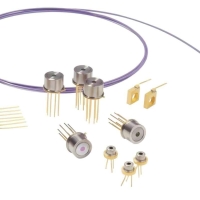
In real-world applications, the raw photodiode chip, even one utilizing advanced materials, is only part of the solution. The transformation of a high-performance semiconductor die into a deployable component is achieved through sophisticated packaging and integration, resulting in modules such as the FCPD (Fiber Coupled Photodetector), HSPD (High-Speed Photodetector), and the ultra-compact SSPD (Small/Sub-miniature High-Speed Photodetector). These packaged units represent the pinnacle of hybrid integration, ensuring that the intrinsic capabilities of the InGaAs photodetector are fully translated into measurable, electrical high-frequency performance.
The functional requirements of a high speed photodetector module dictate that the packaging must address several critical engineering challenges. First and foremost is the impedance match. Since the resulting electrical signal is often in the microwave domain (up to 30 GHz), the output impedance must be precisely matched to 50 ohms to prevent signal reflection, standing waves, and power loss. This is typically achieved using carefully designed coplanar waveguide traces and high-quality, high-frequency connectors (SMA, SMP, or 2.92mm). These connectors are integral to the module housing and are selected for their minimal electrical discontinuity across the entire operating bandwidth.
Secondly, hybrid integration plays a key role. Many modules incorporate a Bias-T circuit. This crucial component allows the DC bias voltage required to operate the InGaAs photodetector (often +3.3V or +5V) to be supplied to the diode chip through the same RF output port that carries the high-speed AC signal. This clever integration simplifies external wiring and reduces the overall footprint, a particularly important consideration in space-constrained systems like electronic warfare and small-form-factor test equipment. Furthermore, hermetic sealing and robust mechanical housing ensure environmental stability. The SSPD, for instance, exemplifies this miniaturization trend, often weighing less than 8 grams while still maintaining a wide bandwidth of 20 GHz, demonstrating that high-speed performance is no longer synonymous with bulky equipment.
The reliability of the InGaAs photodetector is further enhanced by these packaging solutions. Applications in radar information processing and electronic warfare require devices that can operate reliably across wide temperature ranges and harsh conditions. By hermetically sealing the InGaAs photodetector chip and its matching electronics within a metal casing, the module is protected from moisture, contaminants, and mechanical stress. Ultimately, the market for the high speed photodetector is segmented by these physical and functional specifications. Whether it is a rugged HSPD for field deployment or a small-form-factor SSPD for integration into crowded circuits, the final module design is what enables the high-speed optical signal conversion to be practically and reliably exploited in demanding digital and analog systems.